Basic Nerve Conduction Studies
Foundational concepts for conducting nerve conduction assessments
When a nerve is electrically stimulated a reaction should occur. This response can be recorded and measured.
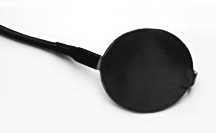
Grounding
- Ground leads must be applied first to patients
- Never use multiple grounds simultaneously, as this creates dangerous “ground loops”
- Positioning should be between stimulating and recording electrodes at equal distances when possible
- Grounds are typically large metal plates or uninsulated needles
Stimulation
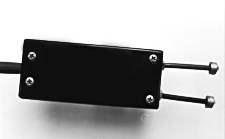
- Electrodes are placed 1.5-3 cm apart
- The cathode should point toward conduction direction
- Current must be increased until maximal response is achieved, then increased 25-50% more
- Difficulties include improper placement, edema, obesity, and electrode cream bridging
- Stimulus duration can be increased to overcome tissue resistance
- Bare-tip insulated needles can be positioned near nerves as cathodes with surface electrodes as anodes
Recording
- Motor responses: Place active electrode over muscle belly at motor point
- Sensory nerves: Position active electrode over nerve itself for nerve action potential
- Reference electrodes placed distally
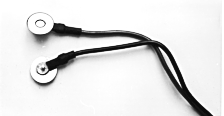
- Motor recording typically uses surface disc electrodes (0.5-1 cm diameter)
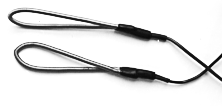
- Sensory recording uses various surface electrode styles or bare-tip insulated needles