Troubleshooting
Solutions for common issues during testing
This page provides guidance for common issues encountered during nerve conduction studies, covering technical problems and best practices for proper electrode placement and equipment functionality.
No Response Issues
When nerve stimulation yields no response, systematic troubleshooting is required:
- Verify stimulator function: Check power switches, electrode connections, and wire integrity using an ohmmeter
- Confirm electrode placement: Ensure stimulating electrodes are positioned correctly over the target nerve
- Address skin preparation: Remove excess cream or perspiration that may create bridges between electrodes; add cream where insufficient
- Adjust stimulus parameters: Increase duration and strength to full output, particularly important for obese patients or those with severe nerve disease
Muscle Contraction Without Evoked Response
Recommended checks include:
- Verify preamplifier input switch is “on”
- Confirm recording electrodes are over the muscle end-plate area
- Remove excessive cream that can create electrode bridges
- Test recording electrodes and connecting wires with an ohmmeter
- On multichannel systems, verify preamplifier-to-amplifier connections
- Check ground lead contact and positioning
- Adjust CRT sweep speed to ensure response visibility
- Increase amplifier gains for low-voltage responses
Stimulus Artifact Problems
Large stimulus artifacts suggest:
- Nonfunctional ground connection—ensure adequate electrode paste and secure placement
- Defective recording electrode—test with ohmmeter and replace if necessary
- Electrode paste bridge between stimulating electrodes
- Consider using needle recording electrodes as alternative
- Verify recording and stimulation cables aren’t crossed
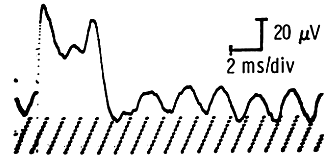
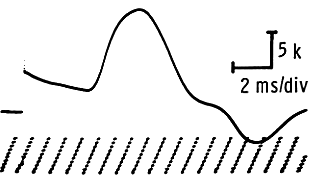
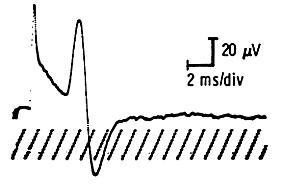
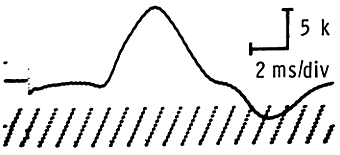
Abnormal Recorded Potentials
Optimization steps include:
- Incrementally reposition stimulating electrodes for optimal response
- Verify supramaximal stimulus strength application
- Confirm recording electrode placement over appropriate muscle
- Maintain adequate electrode paste without creating bridges
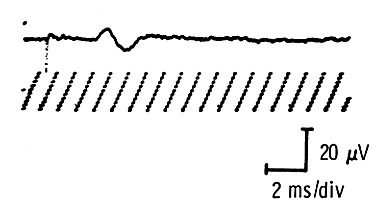
Initial Positive Deflection
Address by:
- Repositioning active recording electrode over muscle motor point
- Verifying correct nerve stimulation without spillover to adjacent nerves
- Checking for crossover stimulation of remote muscles
- Confirming electrode connections aren’t reversed to preamplifier jacks
Note: Posterior tibial nerve recordings from the abductor hallucis typically show initial positive deflection normally.