Variations in Innervation
Anatomical variations in nerve distribution patterns
This page discusses anatomical variants affecting nerve conduction studies in the extremities.
Crossovers (Median-to-Ulnar Communication)
Fibers from the median nerve’s anterior interosseous branch occasionally cross over to join the ulnar nerve in the upper forearm. Crossovers are found in 15 to 30 percent of otherwise normal individuals.
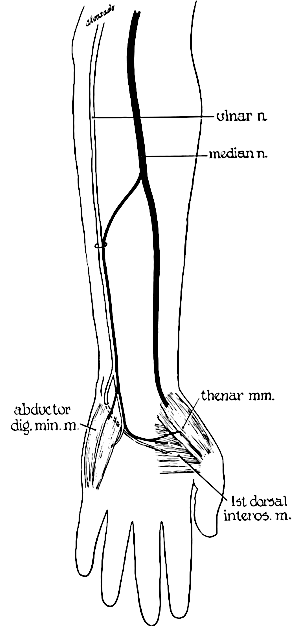
Three subtypes exist:
- Hypothenar type — crossing fibers innervate hypothenar muscles
- First dorsal interosseous type — fibers reach the first dorsal interosseous muscle
- Thenar type — fibers go to ulnar-innervated thenar muscles
Each subtype produces distinct patterns on nerve conduction studies. While these variants don’t substantially complicate routine testing, they can complicate interpretation when carpal tunnel or ulnar neuropathy is present.
Accessory Peroneal Nerve
The extensor digitorum brevis (EDB) typically receives innervation solely from the deep peroneal nerve, but approximately one-third of people have an accessory peroneal branch (from the superficial peroneal nerve) that supplies the lateral EDB portion.
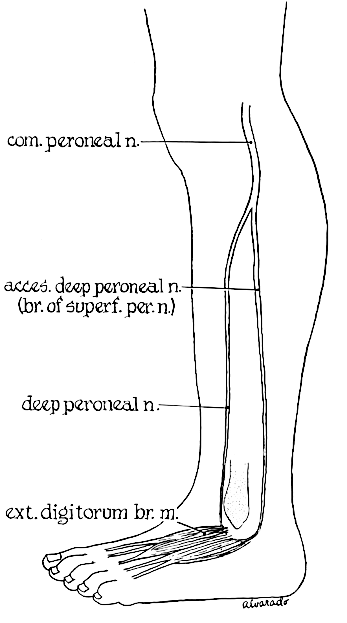
This anatomical variation produces lower amplitude responses when stimulating at the ankle versus the knee during nerve conduction studies.